UNFORESEEN EMISSARY - Final Cut

Showing posts with label Research. Show all posts

Sunday, 25 March 2012

EFFECT OF LIGHTING


TINKER TAILOR SOLDIER SPY 
Tinker Tailor Soldier Spy sustains a low-key lighting throughout the film. It preserves the dark, unnerving feel of the narrative. It also relays the constant mystery applied in the pursuit of the mole and shows the sheer confusion the characters are enduring. Furthermore is gives an insight of their isolation within their pursuit of the mole as it gives rise to the notion of "trusting nobody".


SOMETHING ABOUT MARY

In Something About Mary, high-key lighting is applied all throughout the film. It suggests an optimistic feel as the narrative revolves around a protagonist trying to get the girl. The high-key lighting is also useful as the film reverts back to the past between the central character and the girl to illustrate the naivety and child-like feel of their younger days. The high-key lighting is also used to accentuate the slap-stick comedic element to the story. It could even to used to emphasize the confusion of 4 conflicting character going after the same girl.


LIMITLESS

Limitless utilizes both the high-key lighting and the low-key lighting and exploits them to provide a great sense of depth to the narrative. The low-key lighting are shown in the parts when the protagonist, Eddie Morra, is not using the 'limitless' drug whereas the high-key lighting is used when he is on the drug. The differ in lighting provides this deeper insight to the narrative as the low-key reinforces the nihilism and depressed life Eddie has and the high-key is used to convey and accentuate the feel of success and transcendence.


MOOD BOARD

A mood board is a type of poster design that may consist of images, text, and samples of objects in a composition of the choice of the mood board creator. Designers and others use mood boards to develop their design concepts and to communicate to other members of the design team. Mood boards are often used by graphic designers to enable a person to illustrate visually the direction of style which they are pursuing. However, mood boards can also be used to visually explain a certain style of writing, or an imaginary setting for a storyline. In short, mood boards are not limited to visual subjects, but serve as a visual tool to quickly inform others of the overall 'feel' that a designer is trying to achieve. Our mood board consists of the 'feel' we as a group are trying to convey in our production.


Mood Board

Wednesday, 21 March 2012

ANTAGONIST

The definition of an antagonist is a character, group of characters, or institution, that represents the opposition against which the protagonist must contend. In other words, 'A person, or a group of people who oppose the main character, or the main characters. In the classic style of story wherein the action consists of a hero fighting a villain, the two can be regarded as protagonist and antagonist, respectively.

With the dialogue in Unforeseen Emissary we establish a clear antagonist, an opposition to the protagonist, Agent Smith. This makes the narrative of the film more appealing and adds an enticing element as there seems be subtle hints of history between the antagonist and protagonist with the shock of the "what?!" in the end. We veil the antagonist in mystery and darkness due to the fact that we only refer to him with "he", never revealing his name.

Here are some conventional antagonists that act as clear oppositions to the central character:

Lee Van Cleef - The Good, The Bad and The Ugly

Colonel Miles - Avatar

Joker - The Dark Knight


Monday, 19 March 2012

ANALYSIS OF OPENING SEQUENCE 3

I have analysed the opening sequence of 1991 horror/mystery-thriller Silence of the Lambs. This is because it is rather similar in terms of pace and feeling and also because this is something I hope to achieve regarding the amount of subtext and intricate but subtle story-telling. ANALYSIS of Silence of the Lambs

Monday, 12 March 2012

FAKE BLOOD

This is us making fake blood for our production to increase the authenticity of the mise-en-scene.


COSTUMES

Costumes

OPENING SEQUENCES ARE IMPORTANT

Why are opening sequences so important to not only the film itself but the entire film industry?

Well simply put, its an introduction to the what comes next, a beginning to a story and no story is made without a beginning. Opening sequences are the foundation to an arc and it bears so much significance beyond our first glance. It exhibits implicitly and subtly many features of the narrative of the whole film in that 2 minutes. It effectively defines the movie and, despite the trailer, shows the audience what the film is going to be about or what the film is going to revolve around.

Opening sequences, with consideration, are potentially an important contribution to the film industry. It bears the same intention of what a trailer does for the audience however it does not reveal much but it does reveal a significant amount of the subtext and serves as a taster to the audience. And regarding the position it bears within a narrative, it is responsible for being a beginning of story which is rather vital.


Thursday, 8 March 2012

MUSIC ANALYSIS

THE DARK KNIGHT - WHY SO SERIOUS?


This is an orchestral masterpiece in my opinion. This incorporates and abides by many of the conventions seen in spy-thrillers that contribute to the narrative greatly. It sustains so much suspense and on-the-edge tension with the mass violins congestion slowly overlapping each other and growing louder and louder until it abruptly reaches a halts and transitions into a  faster paced, series of short bursts of violins and irregular trumps of loud drums. I believe this is great as it projects such a dark and ominous energy and somewhat brilliant for our production due to the levels of suspicion and mystery we are trying to achieve.


Here the 'Why So Serious?' OST is implemented in the scene where the Joker crashes the party and ridicules and threatens a member of the party. The music syncs in well with the narrative as it coincides and accentuates the distorted aura we get from the disturbing speech the Joker gives. The violins grow louder and louder as his knife nears the mans face and his voice becomes bigger. The soundtrack really does make an effect to the music as it brings an exaggeration to the conduction of the scene and provides more of an impact for the audience.

Tuesday, 6 March 2012

MOTION


Motion is a software application produced by Apple Inc. It is used to create and edit motion graphics, titling for video production and film production, and 2D and 3D compositing for visual effects.


Features of Motion include the ability to create custom particle effects and to add filters, effects and animations in real time. Motion has the ability to address up to 32 GB of RAM and GPU acceleration at 8-bit, 16-bit and 32-bit float color depths. Motion 2 can also integrate with a MIDI keyboard, so that parameters can be controlled by keys or faders; this opens up the possibility real time parameter input into Motion. In addition Motion 3 now allows for complete 2D and 3D compositing in a multiplane environment.


I believe this would be rather useful for our production as it provides a professional presentation of text, which we can then implement our title of the film. With the appropriate theme and template, we can give the sense of professionalism and more credibility for our production. 


We have applied this with our opening credits to impose a further sense of professionalism:


FINAL CUT PRO

Final Cut Pro is a video editing software developed by Macromedia Inc. and thenApple Inc. The software allows users to log and transfer video onto a hard drive, where it can be edited, processed, and output to a wide variety of formats. Final Cut Pro has developed a large and expanding user base, mainly video hobbyists and independent filmmakers. In later years especially, made inroads with film and television editors.

Sunday, 4 March 2012

LOCATIONS

We conducted a group discussion regarding the location of where we are going to shoot our production. I have contemplated where we can add vital aspects to the mise-en-scene in order to project our narrative as much as possible and what can complement the conventions exhibited in a spy-thriller.

We have decided, for reasons of convenience, to use Chelsea Academy, an old factory and one of our group members apartment. Once considered and slightly altered, it can provide a brilliant location which is appropriate for our narrative.

CHELSEA ACADEMY

Lots Road
London
SW10 0AB

This place is rather convenient for us as our production takes place here and also it provides a political and manufactured atmosphere. This suggests a sense of professionalism and seriousness which is essential for our spy theme throughout our narrative.


THE OLD FACTORY


Lots Road
London
SW10 0AB


This factory is the old London Underground power station and has been abandoned for various decades. This adds a rather ominous feel to the narrative and can very well help us carry out the conventions of a spy-thriller. This is where the conversation between the protagonist and the other MI5 agent will happen and it the emptiness of the area will certainly provide a ominous and dangerous atmosphere for the scene.


THE APARTMENT

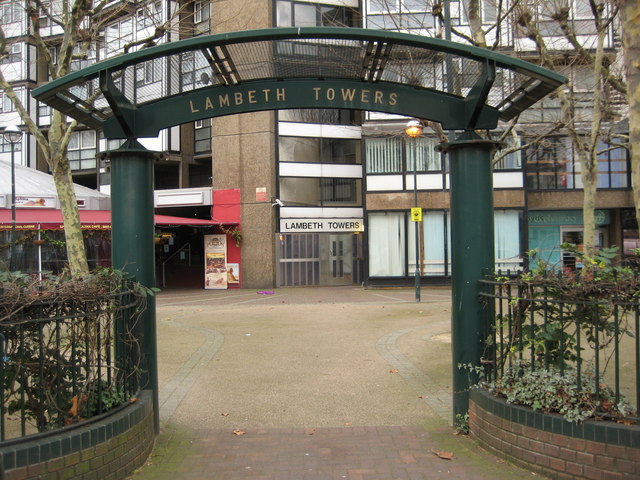
12 Lambeth Towers
Kennington Road
London

This is one of our group members apartment (Ricardo Da Silva). This is just a standard bedroom and bathroom we can use. We will be implementing various props and items to present a suitable mise-en-scene for our opening sequence.

Wednesday, 29 February 2012

COMPANY RESEARCH

We have conducted a group discussion on what to name our production company and have concluded a respectable name that would suit our production of a thriller opening sequence would be Celluloid Pictures. However, for us to be a company we would need a feel and some knowledge of what sort of production companies, similar to what we want ours to be, does in the process of film production.


WARP FILMS


Launched in 2001, Warp Films leads the way in exciting and original British Filmmaking. The company has been behind an array of critically acclaimed and award winning films, including several BAFTAs. These productions include Rubber Johnny, Dead Man's Shoes, This Is England, Donkey Punch, A Complete History of My Sexual Failures and Four Lions. 

Warp films is an independent company and why I think Celluloid Pictures should be linked with it is because it has a rather vast freedom on what their narrative could institute as it is not burdened with the thought of profit as some mainstream film companies do like 20th Century Fox or Universal. The brilliance of having a niche audience is the fact that it enables such artistic value in the story; there are no boundaries in its narrative.  


Four Lions certainly is a good example as it tackles the issues of terrorism in the UK. This is of course a rather serious and controversial topic which mainstream media would often avoid. However, as Warp Films attracts a small and niche audience, they have more freedom to convey such a narrative. It even goes as far as to veil the controversy of terrorism with humor and slap-stick comedy.

WORKING TITLE

Despite the fact that Working Title is part conglomerate, their aspect of independence is something to aspire to. Their narrative often falls into a feel of sophistication, something we would like to incorporate in our production as the element of sophistication is somewhat significant to a spy-thriller.


Tinker Tailor Soldier Spy is our main film of reference and this movie is what I believe is perfect example of how to emulate the feel of sophistication in a spy-thriller. The various aspects of conventions instituted in a thriller is all applied in the film which conveys such a suspenseful and vintage look to the production.

TITLE OF PRODUCTION

So far our group remains indecisive of what to name our film. Therefore we have turned our attention to other films names in order to accumulate some knowledge as to how these names of the films were thought up.

The James Bond series were based on the novels from Ian Fleming. It was said that there was a team of people alongside him who's soul purpose was to think of names to assign to the books. These often resulted to iconic, spring-off-the-tongue names that caught their audiences eyes; ideal for mass appeal as it was cool, unusual and always an eye-catcher.


For example: Quantum Of Solace. This essentially means once depicted: Littleness of regret/concern. This is, in my opinion, a wonderful name as it conveys such sophisticated connotations purely of how they have worded it and of course the sophisticated manner is rather linked with the narrative of the film. The title also compliments the presentation of James Bond in the poster, and in the film, as though he seems like a person of high class, he holds a weapon in clear sight and is surrounded by a desolate area, leaving us to ponder with the question of whether he had caused such a destruction. This generates a rather cryptic and mysterious sense.


Another example would be GoldenEye. GoldenEye acts in accordance with the whole notion of ambiguity in James Bond titles. As gold carries connotations of wealth and riches, we are left with various questions due to the obscurity of its meaning such as whether there is value in observation or someone in the film literally has a golden eye. Either way it is interesting, thought provoking and draws the mass' attention.


We have finally came to an agreement that would suffice as an appropriate and interesting name, Unforeseen Emissary. I believe this is a great name as it complements the narrative of our production with its sophisticated wording. It essentially means an unexpected special mission/diplomatic representative which is rather linked to our narrative and secret-service theme.

Saturday, 25 February 2012

MISE EN SCENE

Mise-en-scene is a vital part for our opening sequence as it translates a further insight to our narrative. This is a good feature of the film we need to invest our consideration and thought into as it can induce some depth to our final piece. But what exactly is Mise-en-scene?:

Mise-en-scene is a term used in film to describe everything that you can hear and see on the screen at any time when watching a film.  The director’s choices of:

·     lighting;
·     scenery and setting;
·     costumes;
·     props;
·     camera shots and camera angles;
·     body-language of actors;
·     sound effects;
·     music,

All help to create a particular atmosphere appropriate for the plot.  The director uses mise-en-scene to help enhance the audience’s understanding of a film and his/her decisions about what should and should not be seen on the screen will affect the overall tone of the piece. 

Basically, mise-en-scene is the director’s tool to stage events, giving him/her the opportunity to make the ultimate decisions about what the audience sees and hears in the movie.  It is the director’s way of adding detail to a film outside of the words an actor delivers in a script and is the equivalent of an author’s use of description in narrative to describe scenes and surroundings in depth.

TTSS PRODUCTION RESEARCH

Here is some background research regarding the production stage of Tinker Tailor Soldier Spy (our film of reference). This is important to know as we need to consider the what a company does such as Working Title prior to the movies release. 


Tinker Tailor Soldier Spy is a recent film made by Working Title. Working Title had recently divulged their ambition to engulf a wider audience, enabling their films to reach a larger market and gain reach of a global standpoint. As a result to this, they have two major distributors, one based in the UK and the other in the US. StudioCanal UK (UK) and Focus Features (US). The production companies that had taken part in making this film are Working Title Films and StudioCanal.

Thomas Alfredson, a Swedish film director, is the one responsible for directing this film. He is internationally best known for the vampire thriller movie Let the Right One In (2009). Alfredson had received a Guldbagge award for best directing for both his 2005 Four Shades of Brown and the 2009 Let the Right One In.

The key people in the production of this movie lay mainly within the cast. Actors such as Gary Oldman and Colin Firth really supports Working Title’s notion to reach a global audience. These two actors are well renown and academy award winners in their credentials, which automatically heightens the status of the movie. Colin Firth and especially Gary Oldman have successfully broken through into the industry globally.

Peter Morgan initiated the project when he wrote a draft of the screenplay, which he offered to Working Title Films to produce. Morgan dropped out as the writer due to personal reasons, but still served as an executive producer. Following Morgan's departure, Working Title hired Peter Straughan and Bridget O'Connor to redraft the script. Tomas Alfredson was confirmed to direct on 9 July 2009. The production is his first English-language film. The film was backed financially by France's StudioCanal and had a budget corresponding to 30 million US dollars.

The film premiered in competition at the 68th Venice International Film Festival on 5 September 2011. StudioCanal UK distributed the film in the United Kingdom, where it was released on 16 September 2011. American rights were acquired by Universal Pictures, which have a permanent first-look deal with Working Title, and passed the rights to their subsidiary Focus Features. Focus plan to give the film a wide release in the United States on 9 December 2011.

STORYBOARD

Here is the storyboard me and my group wish to abide by throughout the production of our opening sequence:


ANIMATIC

An animatic is a is a comic-like guideline for the film. It's an indication of camera work, lighting, sound, etc. and is played in motion, frame after frame in order to project an accurate feel for what the final product could be. It involves either drawn picture or photographs along with brief notes. Gorrilaz, a popular music band, made an animatic for their music video Dirty Harry.

ANIMATIC:


FINAL PRODUCT:

There are very few inaccuracies from the animatic and the actual product but they are more or less the same.

ANALYSIS OF CAMERA WORK IN PSYCHO (1960)

Alfred Hitchcock's classic thriller Psycho (1960) is the film that brought light to the iconic shower scene which had emulated many emotions in accordance to horror and fear. These two emotions are rather vital to the thriller genre and would prove rather useful and could very well provide considerations for me and my group's production. Therefore I have made an in-depth analysis of how the camera techniques had supported the momentous shower scene that had defined the thriller genre itself. This is because I believe it is about time we as a group should take into account the significance of camera work and how it can convey the horror and fear we need for our opening sequence.

http://www.youtube.com/watch?v=8VP5jEAP3K4
(The video i had referred to has disabled it's embedded code. Link is provided above)


In this extract of ‘Psycho’ we see a compilation of camera techniques. It exhibits numerous amounts of camera movements and transitions within its narrative. These techniques are to contribute with the rise of tension gradually meeting the crux of the scene and give a thrilling experience to the audience. Not only does it allow the audience to indulge in the tension being outputted from the scene, but it also relays the emotion from the characters onto us, among other things.

The extract begins with a character writing and then evaluating a sheet of paper which then she rips the piece of paper, starting the scene rather ominously as it suggests that the character wants to conceal it from everyone. A mid-shot is applied introducing the scene with Marion and showing the intensity of her body language as well as her facial expression. In this shot we see she is resting her head on her hand before she rips the paper into shreds. This implies to the audience that she is tired and worn out contributing to the narrative a further element of mystery as we are not quite sure as to why she feels this way. Once she rips the paper, she pauses as if pondering a thought as she then glances to the bathroom. From here the camera pans from one composition to another.

We delve into Marion’s profile further as a mid/long-shot is applied when she leaves her seat, casually walking into the bathroom whilst holding the sheet of paper. This shot provides an insight in the relationship between Marion and her setting. The sense of security and lack of urgency in her posture and the way she walks suggests that there is a degree of comfort. The sense of comfort is ensured further as with this frame it becomes clear what she is wearing - a bath robe. However, the ominous feeling is once again met as the lights are off, supplementing a sense of concealment and solitude. The frame also shows that the only light emanating within the scene is from the bathroom, the room Marion is walking to, possibly suggesting a false sense of a hope as light carries connotations of salvation and hope. Inducing a juxtapostion with the climax of the scene.

The composition then cuts into a close-up shot of the toilet when Marion throws the ripped pieces of paper into it and flushes. The close-up shot imposes significance in the toilet, raising the question as to why she took that many precautions to hide whatever she wrote in the sheet of paper, implementing a further sense of unnerving mystery to the narrative. Prior to the close-up of the toilet, there were two abrupt cuts to from Marion walking to the bathroom into a clear shot of her being in the bathroom and then to the toilet as she throws the ripped pieces of paper into. This raises the pace of the scene giving a rise to the tension outputted by the composition.

An angle of sexual imagery is portrayed in the next frame as the camera cuts into a low-angle shot as Marion removes her bath robe and places it on top of the toilet. Aside from the sexual imagery being presented, we see that the toilet subtly induces another sense of concealment as Marion covers it with her bath robe. A crab shot, still sustaining a low-angle shot, is then used to track Marion as she moves into the shower then closing the blinds. An appliance of vulnerability is given as Marion is now naked, which foreshadows her sudden death in the scene. This is to impose empathy to the audience as throughout the scene so far the camera had focused intently on Marion, following every one of her movements, slowly constructing a sense fear and horror. This serves as a deeper impact onto the audience when she dies at the climax of this scene.

This particular part of the extract bears a series of camera techniques to give rise to the fear and horror in which the climax indulges in. Marion is introduced into the shower with a medium/close-up to establish that she is naked whereas also not revealing too much. This accentuates her sexual appeal, proposing sympathy for Marion, supplementing a more striking impact for the audience when she is brutally murdered. The mid/close-up also establishes the facial expression on Marion. As opposed to the beginning of the scene, Marion seems to be happy and frivolous suggesting that she is free from her bearings and troubles, decreasing the level of fear and horror. This, however, may increase the level of tension as Marion seems to be in a very vulnerable position and possibly signalling a turn of events as there was a continuous unnerving theme given by the varied pace of camera movements. Jump cuts are applied here as Marion showers and a shot/reserve shot is also applied between Marion and the shower cap to show that what she is focusing on. The fast pace of this composition deviates the audience’s attention and subtly constructs a sense of horror and fear. 
Tuesday, 21 February 2012

SOUND MOTIFS

This prezi elaborates the significance of sound (or even the lack of it) and the different types of sounds that can be used in a thriller.


Monday, 20 February 2012

ANALYSIS OF OPENING SEQUENCE 2

I have conducted an analysis of Mary Harron's psychological thriller American Psycho's opening sequence. This presentation is to illustrate how the mise en scene, as well as other things, and the narrative is conveyed and how this relates to it's genre.

Analysis of American Psycho

Here is a link to the opening sequence of American Psycho (2000):
http://www.youtube.com/watch?v=CGeAMVK75T4

Followers