UNFORESEEN EMISSARY - Final Cut

Showing posts with label Construction. Show all posts

Tuesday, 27 March 2012

FINAL CUT OF OPENING SEQUENCE

UNFORESEEN EMISSARY


SHOT LIST:


Over The Shoulder
Over The Shoulder


Shot/Reverse Shot
Close Up/Shot/Reverse Shot


Close Up

Extreme Close Up


POV/Tracking Shot
POV/Tracking Shot
POV/Tracking Shot

Long Shot
Long Shot

Low Angle Shot


Two Shot
Two Shot


High Angle Shot
High Angle Shot


Monday, 19 March 2012

ROUGH CUT

This is a rough cut of our final production of the opening sequence. Here we have established our finalized ideas.


Wednesday, 14 March 2012

DIALOGUE REDRAFT


Dialogue:
(Protagonist = Agent Smith  / Second MI5 agent = Agent Johnson)

Smith:      How are you?
Johnson:  I'm fine. One thing led to another, but I'm just glad it's sorted now.
Smith:      'Sorted'?
Johnson:  Yeah, he's dead now.
Smith:      He's still out there.
Johnson:  What?!

2nd Redraft

Johnson:  Glad you can make it.
Smith:       I haven't got much time S, can you hurry it up. You know I'm not supposed to be here
Johnson:   I need you to do one more thing for me, one more mission. (Leaning his hand on Johnson's shoulder then places other hand on Smith's other shoulder) ...She'd want you to do it.
Smith:       She's not here anymore! I quit a long time ago... I'll see ya' S.

Monday, 12 March 2012

FAKE BLOOD

This is us making fake blood for our production to increase the authenticity of the mise-en-scene.


Sunday, 11 March 2012

SHOOTING SCRIPT (DRAFT 2)


Diegetic sound of the alarm clock going off is heard fading in. An extreme close up on the protagonist's eyes in the beginning showing him opening his eyes. Low-key lighting in the room. Alarm clock is still heard as he sits up from his bed and a high angle shot is applied showing him in a crouched position sitting on the bed with dried blood on his hands and chest. An over-the-shoulder shot is then used behind him facing a picture of him and the girl (possible Red Herring) which then switches to a close-up of the framed picture. The surrounding consists of alcohol bottles and messy, desolate bedroom. Alarm is still ringing and shown in the shot. The diegetic sound of the alarm is still heard until a cut into a close up is applied onto the alarm clock being smacked out of the frame abruptly.

We cut to the hallway where the protagonist steps out from the door to the toilet. A zoom out/zoom in is used revealing only his torso and hands to show the blood stains using a dolly which he then walks to the left into the bathroom. He leans his stretched out arm onto the wall tiles seeming rather distressed and trouble as he has a shower and the water drips off which we see seeping in the drain with a close-up shot. We then cut to him wiping the vapor off the mirror and for the first time, using medium, 3/4 shot, revealing his face from the mirror and also a close-up of the face. He sighs depressingly.


A cut into a long shot, tracking shot of the main character walking along the pavement is used. A match on action is then implemented to show him clutching the door knob and opening the door with a close up of the door knob. He then sits on the chair on the computer in front of him using an over-the-shoulder shot and uses the computer. A close-up is used to show the central character using the computer displaying an intense expression on his face.

Diegetic sound of the conversation between the main character and another MI5 agent slowly interrupts the composition with the central character on the computer until the conversation is fully introduced by a cut in with a close up of the protagonist speaking. We then establish a shot/reverse shot by cutting into another close up shot of the other MI5 agent speaking with the protagonist. A non-diegetic track of an ambient, ominous effect will play throughout the dialogue.

Dialogue:
(Protagonist = Agent 1  / Second MI5 agent = Agent 2)

Agent 1: How is she?
Agent 2: I'm sorry to have to say this...
Agent 1: I assume she's under you're protection.
Agent 2: You're being discharged...
Agent 1: (slight pause) Why...?
Agent 2: (another slight pause) There was noth-
Agent 1: (furiously interrupts) After I went through all that crap just to get her! Why am I being kicked off the service?!
Agent 2: She's-
Agent 1: You know! You know what I had to do to complete the mission, goddamn it!
Agent 2: (Without hesitation) She's dead, agent...

The camera will stop on the protagonist in a close up position and very slowly zoom into his intense facial expression. The diegetic sound of the street slowly fades away and the non-diegetic sound of the ambient effect will fade into an increasingly loud train/airplane sound. All sound will abruptly stop and cut into an extreme close up of the protagonist's eyes with very low key lighting.


Wednesday, 7 March 2012

EQUIPMENT


Film cameras are used and produced today, especially for the production of full feature movies. Film cameras take a series of images; "frame". This is accomplished through an intermittent mechanism. The frames are later played back in a movie projector at a specific speed, called the "frame rate". While viewing, a person's eyes and brain merge the separate pictures together to create the illusion of motion.


As a class we are lucky enough to be using the latest handheld sony cameras that really make it easy to film and upload videos. Our teacher gave us a quick demonstration on how the battery works and what we needed to do to change certain settings. After the tutorial we used the camera to film the preliminary task and got a real feel of how they responded to certain lighting and movements. As a group we decided that the main priorites to dow ith the camera was the charging of it, safety and making sure the seeting configured to the scenes we needed to shoot.


A tripod is a portable three-legged frame, used as a platform for supporting the weight and maintaining the stability of some other object. A tripod provides stability against downward forces, horizontal forces and moments about the vertical axis. The positioning of the three feet away from the vertical centre allows the tripod better leverage for resisting lateral forces. Tripods have the disadvantage of being heavy and bulky although they can be used with large equipment.


Lighting illuminates the performers and artists in a live theatre, dance, or musical performance, and is selected and arranged to create dramatic effects. Dimmers, colored filters, reflectors, lenses, motorized or manually aimed lamps, and different kinds of flood and spot lights are among the tools used by a stage lighting designer to produce the desired effects. A set of lighting cues are prepared so that the lighting operator can control the lights in step with the performance.


A camera dolly is a piece of filmmaking production equipment designed to create smooth camera movements. The camera is mounted to the dolly and the camera operator and focus puller or camera assistant, usually ride on the dolly to operate the camera.


Sound recording is a re-creation of sound waves, such as spoken voice, singing, instrumental music, or sound effects. The two main classes of sound recording technology are analog recording and digital recording. Acoustic analog recording is achieved by a small microphone diaphragm that can detect changes in atmospheric pressure and record them as a graphic representation of the sound waves on a medium such as a phonograph.


Tuesday, 6 March 2012

MOTION


Motion is a software application produced by Apple Inc. It is used to create and edit motion graphics, titling for video production and film production, and 2D and 3D compositing for visual effects.


Features of Motion include the ability to create custom particle effects and to add filters, effects and animations in real time. Motion has the ability to address up to 32 GB of RAM and GPU acceleration at 8-bit, 16-bit and 32-bit float color depths. Motion 2 can also integrate with a MIDI keyboard, so that parameters can be controlled by keys or faders; this opens up the possibility real time parameter input into Motion. In addition Motion 3 now allows for complete 2D and 3D compositing in a multiplane environment.


I believe this would be rather useful for our production as it provides a professional presentation of text, which we can then implement our title of the film. With the appropriate theme and template, we can give the sense of professionalism and more credibility for our production. 


We have applied this with our opening credits to impose a further sense of professionalism:


FINAL CUT PRO

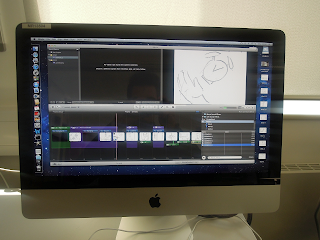
Final Cut Pro is a video editing software developed by Macromedia Inc. and thenApple Inc. The software allows users to log and transfer video onto a hard drive, where it can be edited, processed, and output to a wide variety of formats. Final Cut Pro has developed a large and expanding user base, mainly video hobbyists and independent filmmakers. In later years especially, made inroads with film and television editors.

Sunday, 4 March 2012

LOCATIONS

We conducted a group discussion regarding the location of where we are going to shoot our production. I have contemplated where we can add vital aspects to the mise-en-scene in order to project our narrative as much as possible and what can complement the conventions exhibited in a spy-thriller.

We have decided, for reasons of convenience, to use Chelsea Academy, an old factory and one of our group members apartment. Once considered and slightly altered, it can provide a brilliant location which is appropriate for our narrative.

CHELSEA ACADEMY

Lots Road
London
SW10 0AB

This place is rather convenient for us as our production takes place here and also it provides a political and manufactured atmosphere. This suggests a sense of professionalism and seriousness which is essential for our spy theme throughout our narrative.


THE OLD FACTORY


Lots Road
London
SW10 0AB


This factory is the old London Underground power station and has been abandoned for various decades. This adds a rather ominous feel to the narrative and can very well help us carry out the conventions of a spy-thriller. This is where the conversation between the protagonist and the other MI5 agent will happen and it the emptiness of the area will certainly provide a ominous and dangerous atmosphere for the scene.


THE APARTMENT

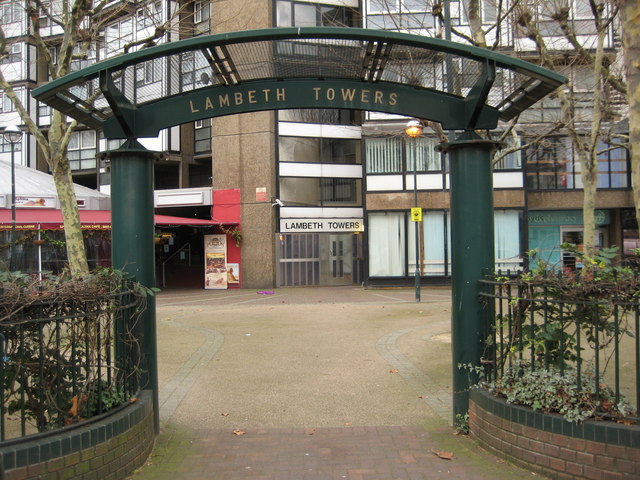
12 Lambeth Towers
Kennington Road
London

This is one of our group members apartment (Ricardo Da Silva). This is just a standard bedroom and bathroom we can use. We will be implementing various props and items to present a suitable mise-en-scene for our opening sequence.

OUR ANIMATIC

We have produced an animatic of our final piece. This is the outline of what our vision of the opening sequence comprises of. In comparison with what the opening sequence will be realistically, it seems short and concise. However this is an animatic without any dialogue and frames in motion and it provides us with a good conception of what the opening sequence would look like once put into practice.

SHOOTING SCRIPT

Diegetic sound of the alarm clock going off is heard fading in. An extreme close up on the protagonist's eyes in the beginning showing him opening his eyes. Low-key lighting in the room. Alarm clock is still heard as he sits up from his bed and a medium shot is applied without fully showing his face. The surrounding consists of empty alcohol bottles and messy, desolate bedroom. Alarm is still ringing and shown in the shot. The diegetic sound of the alarm is still heard until a cut into a close up is applied onto the alarm clock being smacked out of the frame abruptly.

We then cut into the central character having a shower as the camera pans through the frame slowly. We then cut to him wiping the vapor off the mirror and for the first time, using medium, 3/4 shot, revealing his face from the mirror showing the scars and bruises on his face. He sighs depressingly.

A cut into a long shot, tracking shot of the main character walking along the pavement is used. A match on action is then implemented to show him clutching the door knob and opening the door with a close up of the door knob. He then sits on the chair on the computer in front of him using an over-the-shoulder shot and uses the computer. A close-up is used to show the central character using the computer displaying an intense expression on his face.

Diegetic sound of the conversation between the main character and another MI5 agent slowly interrupts the composition with the central character on the computer until the conversation is fully introduced by a cut in with a close up of the protagonist speaking. We then establish a shot/reverse shot by cutting into another close up shot of the other MI5 agent speaking with the protagonist. A non-diegetic track of an ambient, ominous effect will play throughout the dialogue.

Dialogue:
(Protagonist = Agent 1  / Second MI5 agent = Agent 2)

Agent 1: How is she?
Agent 2: I'm sorry to have to say this...
Agent 1: I assume she's under you're protection.
Agent 2: You're being discharged...
Agent 1: (slight pause) Why...?
Agent 2: (another slight pause) There was noth-
Agent 1: (furiously interrupts) After I went through all that crap just to get her! Why am I being kicked off the service?!
Agent 2: She's-
Agent 1: You know! You know what I had to do to complete the mission, goddamn it!
Agent 2: (Without hesitation) She's dead, agent...

The camera will stop on the protagonist in a close up position and very slowly zoom into his intense facial expression. The diegetic sound of the street slowly fades away and the non-diegetic sound of the ambient effect will fade into an increasingly loud train/airplane sound. All sound will abruptly stop and cut into an extreme close up of the protagonist's eyes with very low key lighting.

Monday, 27 February 2012

PRELIMINARY TASK

This is the preliminary task which indicates all the continuity aspects of which we wish to implement in our final production of the opening sequence. The three continuity features outlined in the preliminary task are shot/reverse shot, match on action and keeping within the 180 degree rule.


EVALUATION:

During the start of the clip where Ricardo walks in from outside there are several problems present. The position of the camera is slightly tilted giving an unprofessional look to the production. Also, his face as been cut off from nearing the end of the first shot.

As Ricardo grabs the door handle, we establish a match-on-action shot however, it seems as if he grabs the door too slowly. However, when he walks through the door and the camera moves onto a long/medium shot of him coming through the door, it looks good in terms of continuity.

The continuity of the clip is staggered however when Ricardo walk through the hallway into the door as there  seems to be some repeat or backtrack of him coming through as seen through the window next to the door.

The shot/reverse shot is established between me and Ricardo during the exchange of dialogue. I believe we have sustained a good sense of continuity due to the variety of the shots exhibited and also the flow of the conversation. It is also good as we succeeded in not breaking the 180 degree rule allowing for assert the same right/left relationship and assuring professionalism.


Saturday, 25 February 2012

STORYBOARD

Here is the storyboard me and my group wish to abide by throughout the production of our opening sequence:


Friday, 3 February 2012

GROUP DISCUSSIONS

24th JANUARY 2012

My group have conducted a meeting to relay our ideas of what the our final piece should be. Whilst deciding we have peer assessed each other's presentations of the conventions of thriller. With this, I had a wider range of knowledge as what thriller incorporates in it's films and the significance of using it. I wish to apply what I have l have learnt into out final piece.


We also researched on the other thrillers such as action thriller, psychological thriller, romantic thriller, etc. After careful consideration of our research we have concluded and compromised with what it should be and have decided that our final piece shall be a Spy-Thriller.


2nd FEBRUARY 2012

Me and my group had conducted a questionnaire as part of the audience research in order for us to gain an insight for what our final piece could be. prior to this, we had discussed what type of thriller we want for our final piece and concluded that we would like it be a spy thriller. With this, I had constructed an interview with three people who had recently watched Tinker Tailor Soldier Spy. The questions are intended to support or choice for our final piece. We had chosen Tinker Tailor Soldier Spy as it was our main film for reference as it exercises many of the conventions we want to implement to our final piece.  


28th FEBRUARY 2012

Me and my group decided to conduct some further research of our own in order to find out about shooting schedules and storyboarding. We wanted to grasp a stronger understanding of what they entailed before going ahead and creating one. We went on the internet and used some sheets and booklets to find some research and then we added it to our blog.


1st MARCH 2012

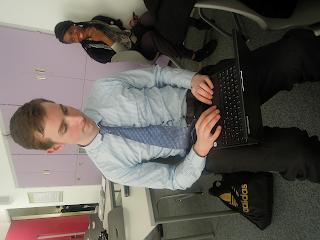
The following images are from our session in which we completed our animatic. As a group we split up in to different sections. I took care of the visual side of the animatic. Me and Johnnnie recorded the exterior sounds that we needed such as the shower and the keyboard. We then came together as a group and collaborated on what we had collected. We pieced all the components together to complete our animatic. 


7th MARCH 2012

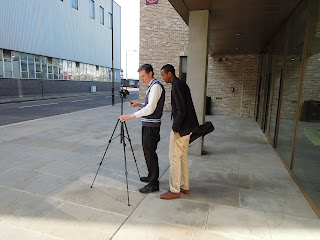
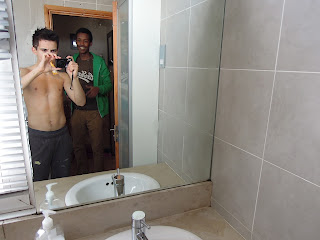
First day of filming- Chelsea Academy. Me and Ricardo collected the neccesary equipment to film our first couple of scenes. The equipment included a video camera, tripod and camera. The camera was used to record proof of working and filming as we took various pictures in on our set. We were working under time constraints and this seemed to make us highly effective as we filmed five minutes worth of film and had it uploaded in about two hours. Some of the problems we had to deal with was being quiet due to lessons taking place and children coming out for break. However when this was the case we took that oppurtunity to take picture and move on to our next location.


10th MARCH 2012

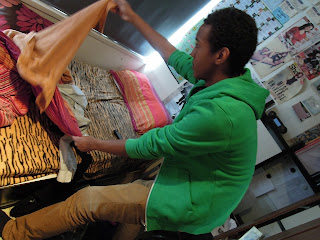
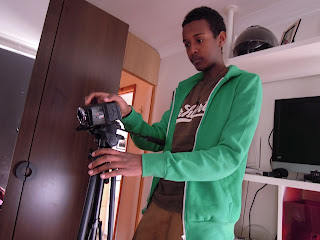
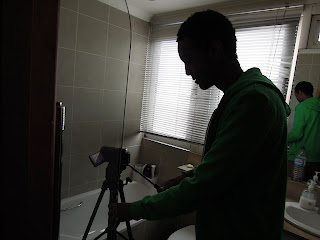
Today me and Ricardo filmed the bulk of our opening sequence. I arrived at his house early in the morning and we went straight to work trying to capture the vital shots. Ricardo had before hand made the fake blood we would be needing for the scene. We had learnt from our provisional task the importance of continuity and framing and we made sure everything we did stayed the same through out each shot. It was tough and there were moments where we struggled such as making sure the blood looked like it was in the right place but also dry. However we worked much more effiecently and actually took less time then we had expected. For todays filming we used a video camera, tripod, dolly and camera for set shots. We made sure to take more than one shot for each moment to make sure that we were able to change and edit anything we didnt like when we arrived in school on Monday.


12th MARCH 2012

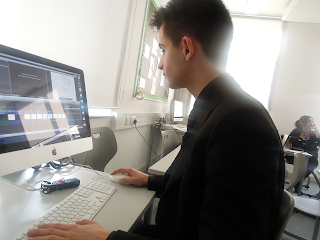
Today was the first day of editing. We had completed all our preliminary filming we would need for the opening sequence and would only re-shoot if necessary. I started of by cutting any unwanted sections of the clip and arrange them in the order most appropriate to our vision. I made sure to cut out background noise. Editing was tougher than i thought and trying to piece together a two minute film is difficult as we had so much footage to cut out.

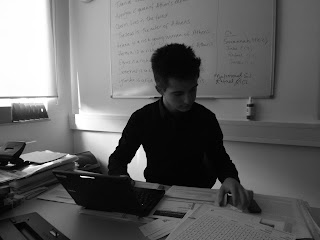
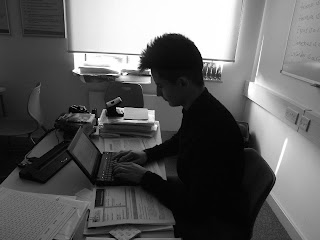
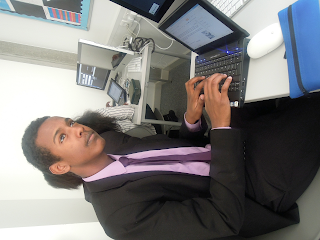
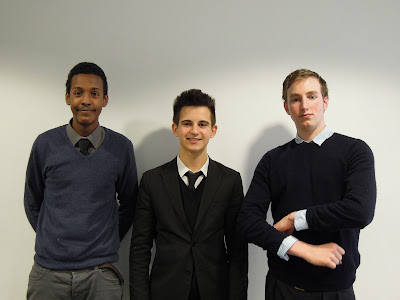
Here is a casting shot of the Celluloid Pictures group (From left to right: Dauud, Ricardo, Johnnie)


Followers