Looking back at your preliminary task, what do you feel you have learnt in the progression from it to the full product?
Saturday, 28 April 2012

EVALUATION QUESTION 6
What have you learnt about technologies from the process of consulting this product?
EVALUATION QUESTION 1
In what ways does your media product use, develop or challenge forms and conventions of real media products?
Thursday, 29 March 2012
FINAL CUT AUDIENCE FEEDBACK
This is audience feedback for the final version of Unforeseen Emissary. We have acknowledged the criticisms and enhanced the liked things in accordance to the comments from the previous audience feedback. The people I chose to interview are still in our range of audience - 16 and above. (Richard, Babatunde, Loveline, Edna and Teddy) I deviated from the questions slightly from the previous interviews to confront more of an insight to their opinion.
Tuesday, 27 March 2012
FINAL CUT OF OPENING SEQUENCE
UNFORESEEN EMISSARY
SHOT LIST:
SHOT LIST:
 |
| Over The Shoulder |
 |
| Over The Shoulder |
 |
| Shot/Reverse Shot |
 |
| Close Up/Shot/Reverse Shot |
 |
| Close Up |
 |
| Extreme Close Up |
 |
| POV/Tracking Shot |
 |
| POV/Tracking Shot |
 |
| POV/Tracking Shot |
 |
| Long Shot |
 |
| Long Shot |
 |
| Low Angle Shot |
 |
| Two Shot |
 |
| Two Shot |
 |
| High Angle Shot |
 |
| High Angle Shot |
Monday, 26 March 2012
ROUGH CUT AUDIENCE FEEDBACK
Here is footage of our target audience being interviewed after just watching our rough cut version of our production 'Unforeseen Emissary'. I asked 3 questions after informing them of what our project is about:
- What do you think of the opening sequence?
- Was a good thriller?
- What did you like about it?
- What didn't you like about it?
The people I interviewed people who are as closest to our target audience as possible. I asked Jay (18), Jack (17), Malak (17) and Kalvin (16).
- What do you think of the opening sequence?
- Was a good thriller?
- What did you like about it?
- What didn't you like about it?
The people I interviewed people who are as closest to our target audience as possible. I asked Jay (18), Jack (17), Malak (17) and Kalvin (16).
Sunday, 25 March 2012
EFFECT OF LIGHTING
TINKER TAILOR SOLDIER SPY
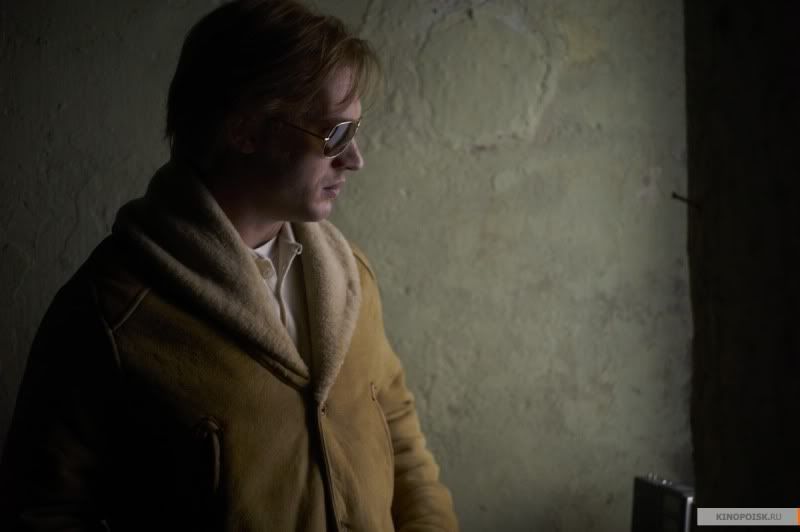
Tinker Tailor Soldier Spy sustains a low-key lighting throughout the film. It preserves the dark, unnerving feel of the narrative. It also relays the constant mystery applied in the pursuit of the mole and shows the sheer confusion the characters are enduring. Furthermore is gives an insight of their isolation within their pursuit of the mole as it gives rise to the notion of "trusting nobody".
SOMETHING ABOUT MARY
In Something About Mary, high-key lighting is applied all throughout the film. It suggests an optimistic feel as the narrative revolves around a protagonist trying to get the girl. The high-key lighting is also useful as the film reverts back to the past between the central character and the girl to illustrate the naivety and child-like feel of their younger days. The high-key lighting is also used to accentuate the slap-stick comedic element to the story. It could even to used to emphasize the confusion of 4 conflicting character going after the same girl.


LIMITLESS
Limitless utilizes both the high-key lighting and the low-key lighting and exploits them to provide a great sense of depth to the narrative. The low-key lighting are shown in the parts when the protagonist, Eddie Morra, is not using the 'limitless' drug whereas the high-key lighting is used when he is on the drug. The differ in lighting provides this deeper insight to the narrative as the low-key reinforces the nihilism and depressed life Eddie has and the high-key is used to convey and accentuate the feel of success and transcendence.
MOOD BOARD
A mood board is a type of poster design that may consist of images, text, and samples of objects in a composition of the choice of the mood board creator. Designers and others use mood boards to develop their design concepts and to communicate to other members of the design team. Mood boards are often used by graphic designers to enable a person to illustrate visually the direction of style which they are pursuing. However, mood boards can also be used to visually explain a certain style of writing, or an imaginary setting for a storyline. In short, mood boards are not limited to visual subjects, but serve as a visual tool to quickly inform others of the overall 'feel' that a designer is trying to achieve. Our mood board consists of the 'feel' we as a group are trying to convey in our production.
Mood Board
Mood Board
Wednesday, 21 March 2012
ANTAGONIST
The definition of an antagonist is a character, group of characters, or institution, that represents the opposition against which the protagonist must contend. In other words, 'A person, or a group of people who oppose the main character, or the main characters. In the classic style of story wherein the action consists of a hero fighting a villain, the two can be regarded as protagonist and antagonist, respectively.
With the dialogue in Unforeseen Emissary we establish a clear antagonist, an opposition to the protagonist, Agent Smith. This makes the narrative of the film more appealing and adds an enticing element as there seems be subtle hints of history between the antagonist and protagonist with the shock of the "what?!" in the end. We veil the antagonist in mystery and darkness due to the fact that we only refer to him with "he", never revealing his name.
Here are some conventional antagonists that act as clear oppositions to the central character:
With the dialogue in Unforeseen Emissary we establish a clear antagonist, an opposition to the protagonist, Agent Smith. This makes the narrative of the film more appealing and adds an enticing element as there seems be subtle hints of history between the antagonist and protagonist with the shock of the "what?!" in the end. We veil the antagonist in mystery and darkness due to the fact that we only refer to him with "he", never revealing his name.
Here are some conventional antagonists that act as clear oppositions to the central character:
 |
| Lee Van Cleef - The Good, The Bad and The Ugly |
 |
| Colonel Miles - Avatar |
 |
| Joker - The Dark Knight |
Monday, 19 March 2012
ANALYSIS OF OPENING SEQUENCE 3
I have analysed the opening sequence of 1991 horror/mystery-thriller Silence of the Lambs. This is because it is rather similar in terms of pace and feeling and also because this is something I hope to achieve regarding the amount of subtext and intricate but subtle story-telling.
ANALYSIS of Silence of the Lambs
ROUGH CUT EVALUATION
My class had conducted a group evaluation after a screening of our rough cut. My group then leaded some questions involving what went well and even better ifs. These points were regarding camera work, title sequence, the conventions met and some general points.I have accumulated the responses on a Prezi.
ROUGH CUT
This is a rough cut of our final production of the opening sequence. Here we have established our finalized ideas.
Wednesday, 14 March 2012
DIALOGUE REDRAFT
Dialogue:
(Protagonist = Agent Smith / Second MI5 agent = Agent Johnson)
Smith: How are you?
Johnson: I'm fine. One thing led to another, but I'm just glad it's sorted now.
Smith: 'Sorted'?
Johnson: Yeah, he's dead now.
Smith: He's still out there.
Johnson: What?!
2nd Redraft
Johnson: Glad you can make it.
Smith: I haven't got much time S, can you hurry it up. You know I'm not supposed to be here
Johnson: I need you to do one more thing for me, one more mission. (Leaning his hand on Johnson's shoulder then places other hand on Smith's other shoulder) ...She'd want you to do it.
Smith: She's not here anymore! I quit a long time ago... I'll see ya' S.
Monday, 12 March 2012
FAKE BLOOD
This is us making fake blood for our production to increase the authenticity of the mise-en-scene.
OPENING SEQUENCES ARE IMPORTANT
Why are opening sequences so important to not only the film itself but the entire film industry?
Well simply put, its an introduction to the what comes next, a beginning to a story and no story is made without a beginning. Opening sequences are the foundation to an arc and it bears so much significance beyond our first glance. It exhibits implicitly and subtly many features of the narrative of the whole film in that 2 minutes. It effectively defines the movie and, despite the trailer, shows the audience what the film is going to be about or what the film is going to revolve around.
Opening sequences, with consideration, are potentially an important contribution to the film industry. It bears the same intention of what a trailer does for the audience however it does not reveal much but it does reveal a significant amount of the subtext and serves as a taster to the audience. And regarding the position it bears within a narrative, it is responsible for being a beginning of story which is rather vital.
Well simply put, its an introduction to the what comes next, a beginning to a story and no story is made without a beginning. Opening sequences are the foundation to an arc and it bears so much significance beyond our first glance. It exhibits implicitly and subtly many features of the narrative of the whole film in that 2 minutes. It effectively defines the movie and, despite the trailer, shows the audience what the film is going to be about or what the film is going to revolve around.
Opening sequences, with consideration, are potentially an important contribution to the film industry. It bears the same intention of what a trailer does for the audience however it does not reveal much but it does reveal a significant amount of the subtext and serves as a taster to the audience. And regarding the position it bears within a narrative, it is responsible for being a beginning of story which is rather vital.
Subscribe to:
Posts (Atom)