UNFORESEEN EMISSARY - Final Cut

Tuesday, 6 March 2012

MOTION


Motion is a software application produced by Apple Inc. It is used to create and edit motion graphics, titling for video production and film production, and 2D and 3D compositing for visual effects.


Features of Motion include the ability to create custom particle effects and to add filters, effects and animations in real time. Motion has the ability to address up to 32 GB of RAM and GPU acceleration at 8-bit, 16-bit and 32-bit float color depths. Motion 2 can also integrate with a MIDI keyboard, so that parameters can be controlled by keys or faders; this opens up the possibility real time parameter input into Motion. In addition Motion 3 now allows for complete 2D and 3D compositing in a multiplane environment.


I believe this would be rather useful for our production as it provides a professional presentation of text, which we can then implement our title of the film. With the appropriate theme and template, we can give the sense of professionalism and more credibility for our production. 


We have applied this with our opening credits to impose a further sense of professionalism:


FINAL CUT PRO

Final Cut Pro is a video editing software developed by Macromedia Inc. and thenApple Inc. The software allows users to log and transfer video onto a hard drive, where it can be edited, processed, and output to a wide variety of formats. Final Cut Pro has developed a large and expanding user base, mainly video hobbyists and independent filmmakers. In later years especially, made inroads with film and television editors.

AUDIENCE RESEARCH 2

I have made another audience research into an opening sequence. I issued a questionnaire to 3 people who have recently watched James Bond: Casino Royale and the questions are regarding the opening sequence of the film and asking what they thought about it's relevance to the thriller genre.

Here is the outline of the interview:


Did you think it was a good film?


1) Yeah, it was a great film. I loved the action scenes and the whole story. It was so 'James Bond' if you know what I mean; the sophisticatedness, the classyness, the suspense, the action, the romance. They did everything right except one thing in my opinion. Ironically; James Bond himself. I don't think the actor portrayed they entire concept and legacy of James Bond well enough. But other than that, its good.

2) It was good but not the best film and definitely not the best James Bond film. As he said, there was a legacy that they had to pull off if they were gonna introduce a new actor and I think they didn't quite cut it to be honest. But I'm not saying that it was bad, I enjoyed the movie, but not an amazing one.

3) It wasn't that good of a film. In the end it was just mindless action that kind of got in the way of the story, not to mention that there was no believability in the film and that's what ruined it for me. I couldn't get to grips with the story because it was so uncanny, and I'm aware that every James Bond film is pretty much filled with action and cars and some more ridiculous stuff, but it was the way they told the story what made it conceivable. But hey, thats my opinion.


Did you think it was a good thriller?


1) Yeah, it was a damn good thriller in comparison with other thrillers. Thrillers like Seven or Body Of Lies are great because it was a lot of suspense and action and mystery and I believe Casino Royale truly achieved those aspects.

2) Basing my knowledge on other thrillers like Salt and The Bourne series, it was a pretty good. It had action, it had sexyness, it had drama, it had tension. It had all those things to keep that the viewer on the edge of their seats and I loved it. In terms of how Casino Royale did in reaching the goals that makes it a thriller, it did good and I proper enjoyed it.

3) Casino Royale did great in sustaining the conventions of a thriller but it missed out, in what I believe, a golden rule in what makes a thriller interesting - Believability. I'm sorry that I keep on banging on about this but thats what makes the thrill in thrillers, the fact that it could very well happen to you! Thrillers like Inception sure does seem to be out there but they had the explanations and science which makes it somewhat conceivable.


What do you think of the opening sequence?


1) Oh wow that was such an amazing opening sequence. Such mystery, such tension. That truly put me on the edge of my seat there. That was such a good chase scene that followed after that tracking segment of the scene. And man, that was a  great way to introduce the James Bond. Brilliant.

2) That was a great way to open a film, the amount of action that was cramped in that one sequence was awesome.

3) Two people running by a construction site making their way to a top of a crane and ending up destroying the place and making a series of explosions was ridiculous. So much so, I sorta laughed. And theres my point on conceivability. But really though, I loved watching it. But I felt detached rather than being indulged and thats why it should be believable.


Sunday, 4 March 2012

LOCATIONS

We conducted a group discussion regarding the location of where we are going to shoot our production. I have contemplated where we can add vital aspects to the mise-en-scene in order to project our narrative as much as possible and what can complement the conventions exhibited in a spy-thriller.

We have decided, for reasons of convenience, to use Chelsea Academy, an old factory and one of our group members apartment. Once considered and slightly altered, it can provide a brilliant location which is appropriate for our narrative.

CHELSEA ACADEMY

Lots Road
London
SW10 0AB

This place is rather convenient for us as our production takes place here and also it provides a political and manufactured atmosphere. This suggests a sense of professionalism and seriousness which is essential for our spy theme throughout our narrative.


THE OLD FACTORY


Lots Road
London
SW10 0AB


This factory is the old London Underground power station and has been abandoned for various decades. This adds a rather ominous feel to the narrative and can very well help us carry out the conventions of a spy-thriller. This is where the conversation between the protagonist and the other MI5 agent will happen and it the emptiness of the area will certainly provide a ominous and dangerous atmosphere for the scene.


THE APARTMENT

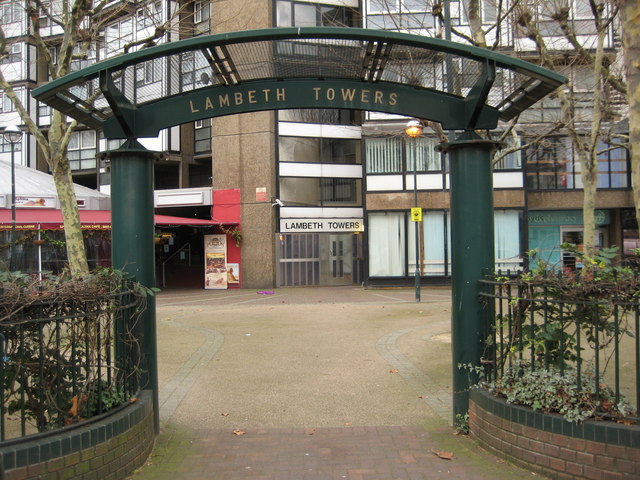
12 Lambeth Towers
Kennington Road
London

This is one of our group members apartment (Ricardo Da Silva). This is just a standard bedroom and bathroom we can use. We will be implementing various props and items to present a suitable mise-en-scene for our opening sequence.

EVALUATION


Questions for evaluating my animatic:


 - What did I learn from my research into animatics? What are they and why are they used?

Animatics are basically drawn frames that are simply animated together in order to convey a shot-by-shot presentation and give an idea to what the final piece could potentially be. After research of what animatics are, I believe this is vital in our production towards our final piece. Animatics for our opening sequence is the closest thing we can do to visualize our ideas.

 - What are they key conventions / form of an animatic?

Animatics often are illustrated with pens or pencils and not put into motion but placed together with a shot-by-shot nature.

 - What are the benefits of using an animatic in my planning for the thriller title sequence? Who will see it and why?

The benefits of using an animatic is that me and my group can visualize our ideas into the drawings and we can get a feel of what our opening sequence could potentially be. This animatic will only be shown to the producers (me and my group) rather than our audience as this is just a prototype for our final piece. Once we have taken in all considerations by other research we have conducted such as the audience research and what they want in a thriller, then we can commence filming the real thing.

 - How did you plan your animatic?

Each of the group members were issues with a template. The template involved a space of which we draw the frames and boxes where we include information about each shot like sound, camera position, lighting, etc. Once we have finished it we have chosen the best one among ourselves and added further information to it.

 - Which programmes did you use to create your animatic? How did you create the sounds?

We used Final Cut to produce our animatic. Final Cut had some sounds appropriate to our animatic such as the ambient sound effect and the footsteps. Then for shots like the shower frame and the computer frame we have made our own sounds from a recorder. We used the recorder to makes sounds from the shower and keyboard sounds.

 - What challenges did you face when producing your animatic? how did you overcome these?

We initially thought that we might have to take photo's of each drawing. This would be time consuming and the pictures would not be very clear. However we overcame this by using a scanner to scan the sheets therefore we have proper clarity of the illustrations and it was much more time efficient.

 -  How will you now improve your finished piece, based on this feedback?

After considering the animatic, there are definitely some improvements we can acknowledge for the sake of our final piece. We can consider the camera angles and movements during the start of the opening sequence to not show the protagonist's face. When the protagonist wipes the vapor off the mirror, adjusting the camera angle to ensure that the camera is not seen in the reflection. Lastly, how to elongate the narrative to reach the 2 minute marker for our assignment.


Questions for evaluating my shooting script:


 - What did I learn from my research into shooting scripts? What are they and why are they used?

Shooting scripts are meant to give a good and detailed insight of what the production will comprise of. It includes things such as the camera work, lighting, sound, editing and the dialogue as well as where and how the characters are placed and what they do. From my research into shooting scripts I have learnt that shooting scripts are rather important to everybody involved in a production as we are all provided a suggestion of how we should conduct the opening sequence.

 - What are the benefits of designing a shooting script for my product? Who will see it and why?

The shooting script is given to everybody involved in the production as it serves as a guideline of how to make the film. After Once we have taken in all considerations by other research we have conducted such as the audience research and what they want in a thriller, then we can make a few changes to the script and commence filming the real thing.

 - How did you plan your shooting script? what did you need to consider in doing this?

We had a group meeting regarding the shooting script. In that meeting, we had accumulated all our ideas and made a compromise of how the script should be. While doing this, we took into consideration of the film Tinker Tailor Soldier Spy as it is our main film of reference and we need to know how they have conveyed their narrative.

 - What challenges did you face when producing your shooting script? how did you overcome these?

Everyone in our group had conflicting ideas which we all felt somewhat passionate about to some degree. But after a long time considering and acknowledging each others thoughts we all came to a compromise by referencing Tinker Tailor Soldier Spy and its relevance to the conventions in a spy-thriller and what our audience wants from our audience research.

 - How will you now improve your finished piece, based on what you have learnt from completing this task?

We will now improve our final piece with a proper sense of direction in our production and a good sense of intensity in our dialogue with something we can all be happy about.


OUR ANIMATIC

We have produced an animatic of our final piece. This is the outline of what our vision of the opening sequence comprises of. In comparison with what the opening sequence will be realistically, it seems short and concise. However this is an animatic without any dialogue and frames in motion and it provides us with a good conception of what the opening sequence would look like once put into practice.

SHOOTING SCRIPT

Diegetic sound of the alarm clock going off is heard fading in. An extreme close up on the protagonist's eyes in the beginning showing him opening his eyes. Low-key lighting in the room. Alarm clock is still heard as he sits up from his bed and a medium shot is applied without fully showing his face. The surrounding consists of empty alcohol bottles and messy, desolate bedroom. Alarm is still ringing and shown in the shot. The diegetic sound of the alarm is still heard until a cut into a close up is applied onto the alarm clock being smacked out of the frame abruptly.

We then cut into the central character having a shower as the camera pans through the frame slowly. We then cut to him wiping the vapor off the mirror and for the first time, using medium, 3/4 shot, revealing his face from the mirror showing the scars and bruises on his face. He sighs depressingly.

A cut into a long shot, tracking shot of the main character walking along the pavement is used. A match on action is then implemented to show him clutching the door knob and opening the door with a close up of the door knob. He then sits on the chair on the computer in front of him using an over-the-shoulder shot and uses the computer. A close-up is used to show the central character using the computer displaying an intense expression on his face.

Diegetic sound of the conversation between the main character and another MI5 agent slowly interrupts the composition with the central character on the computer until the conversation is fully introduced by a cut in with a close up of the protagonist speaking. We then establish a shot/reverse shot by cutting into another close up shot of the other MI5 agent speaking with the protagonist. A non-diegetic track of an ambient, ominous effect will play throughout the dialogue.

Dialogue:
(Protagonist = Agent 1  / Second MI5 agent = Agent 2)

Agent 1: How is she?
Agent 2: I'm sorry to have to say this...
Agent 1: I assume she's under you're protection.
Agent 2: You're being discharged...
Agent 1: (slight pause) Why...?
Agent 2: (another slight pause) There was noth-
Agent 1: (furiously interrupts) After I went through all that crap just to get her! Why am I being kicked off the service?!
Agent 2: She's-
Agent 1: You know! You know what I had to do to complete the mission, goddamn it!
Agent 2: (Without hesitation) She's dead, agent...

The camera will stop on the protagonist in a close up position and very slowly zoom into his intense facial expression. The diegetic sound of the street slowly fades away and the non-diegetic sound of the ambient effect will fade into an increasingly loud train/airplane sound. All sound will abruptly stop and cut into an extreme close up of the protagonist's eyes with very low key lighting.

Followers